Tallahassee Septic Services |Residential & Commercial Septic Tank and Drain Field Services
Tallahassee Septic Services is the #1 septic in Tallahassee, FL.
Our services include:
Septic tank pumping
Septic tank cleaning
Septic tank inspections (real estate inspections)
Septic tank repairs
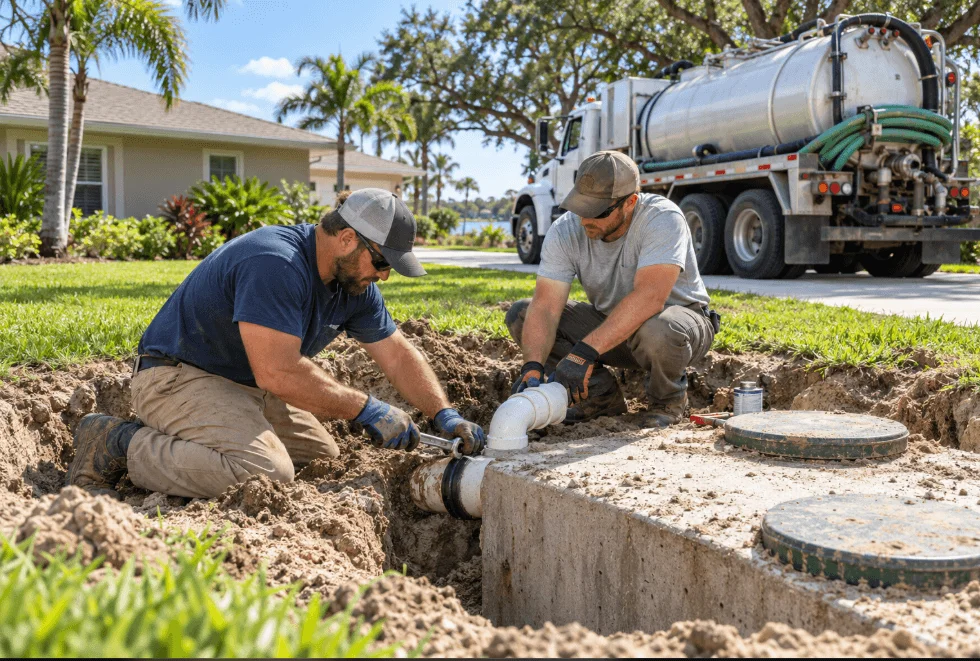
Septic tank installation and replacement
Drain field inspections
Drain field repairs
Drain field replacement
We have over 27 years of experience in installs, repairs and business development. Our goal is to make sure that your septic needs are done right by people who have the experience to do so. Tank sizes around 1,000 to 1,200 gallons are useful residential planning examples in Tallahassee, so it's important to plan around your actual septic setup. Confirm the installed capacity from the system record. Expected service life depends on the installed product, site conditions and maintenance.
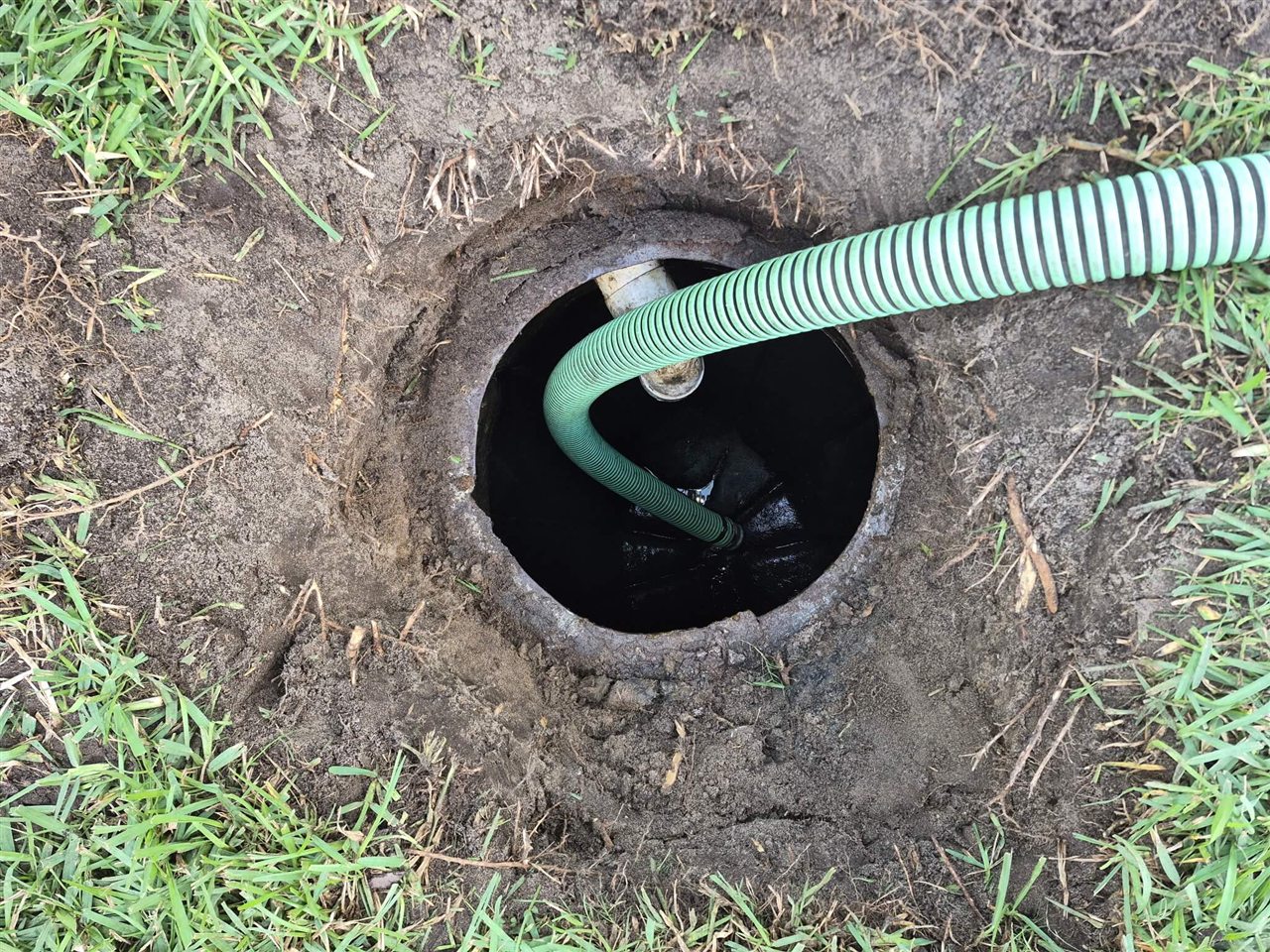
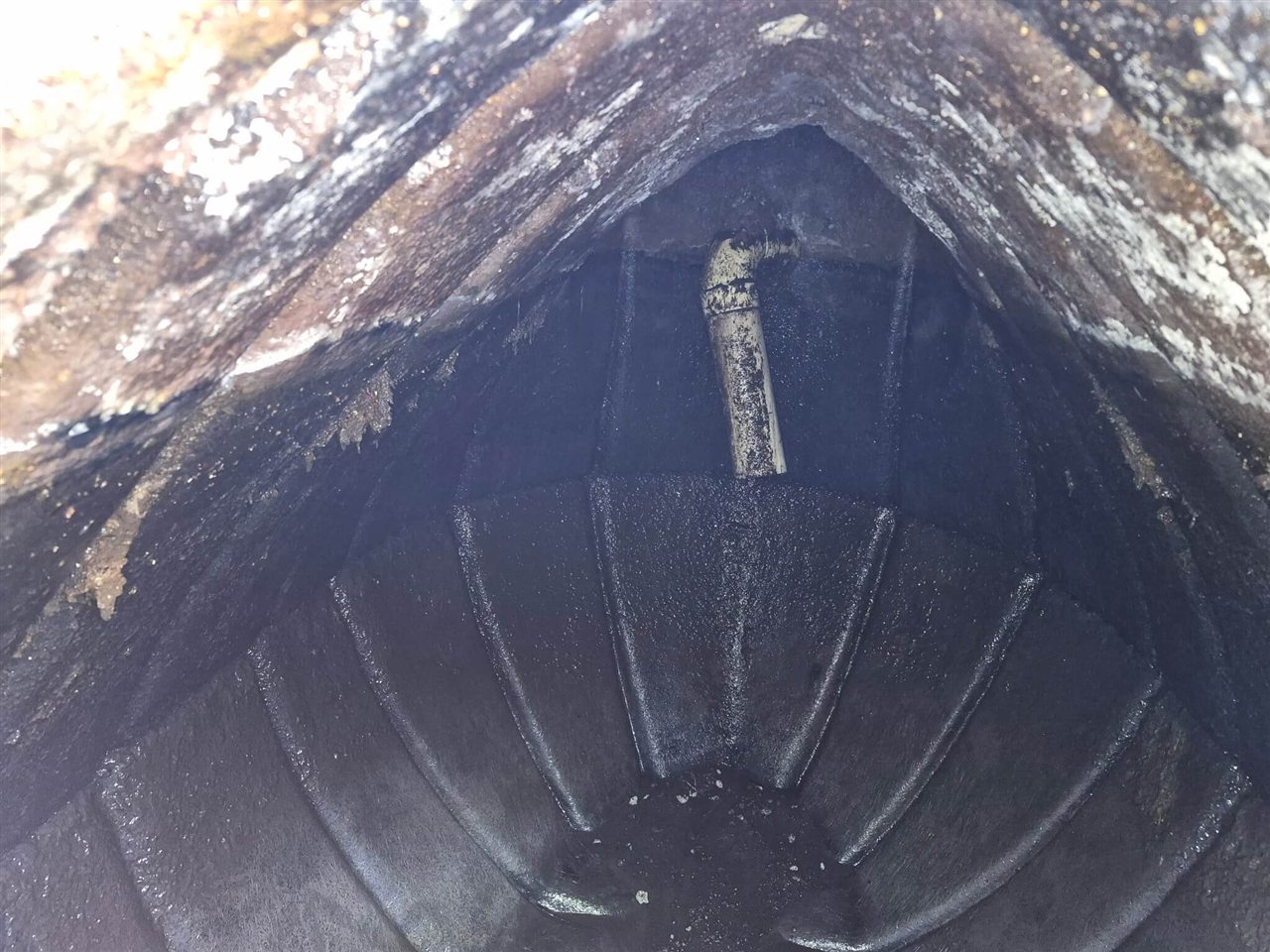
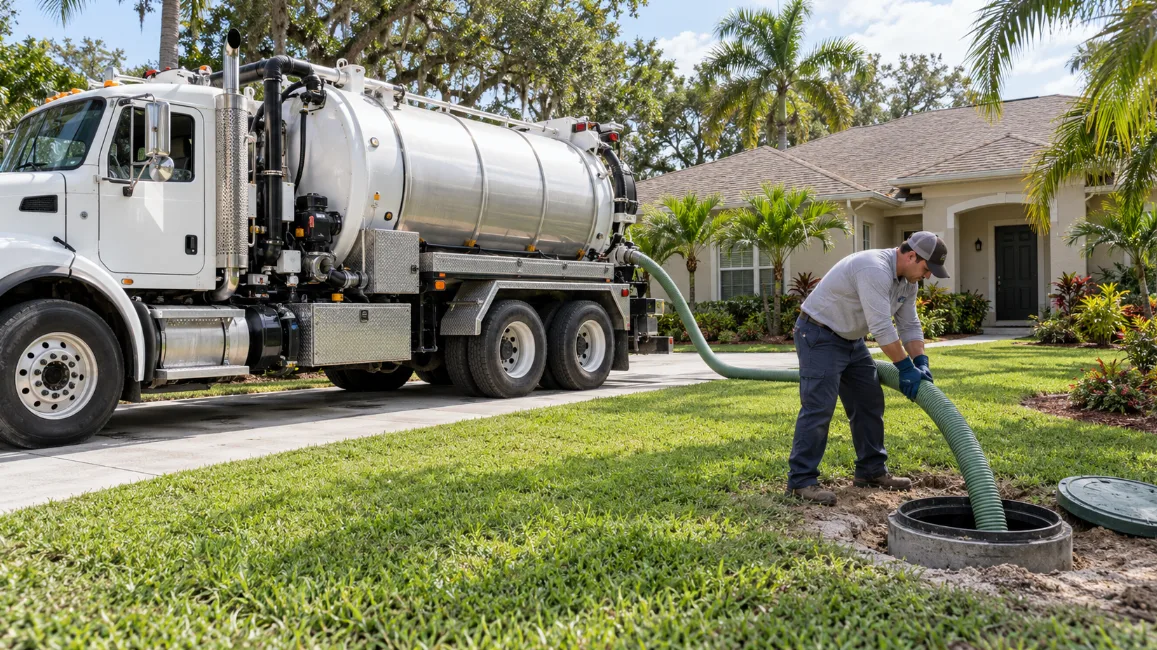
The homeowner needed help after a backup revealed that the septic tank was full. The work called for pumping and cleaning the inside of the tank. We emptied the approximately 1000 gallon fiberglass tank. After pumping we rinsed the interior walls to clear away the sludge and scum. Our work combined a complete pump out with a rinse of the tank walls. That addressed the full tank and removed the remaining sidewall buildup.
Cost
$475
Timeline to completion
2 to 3 hours
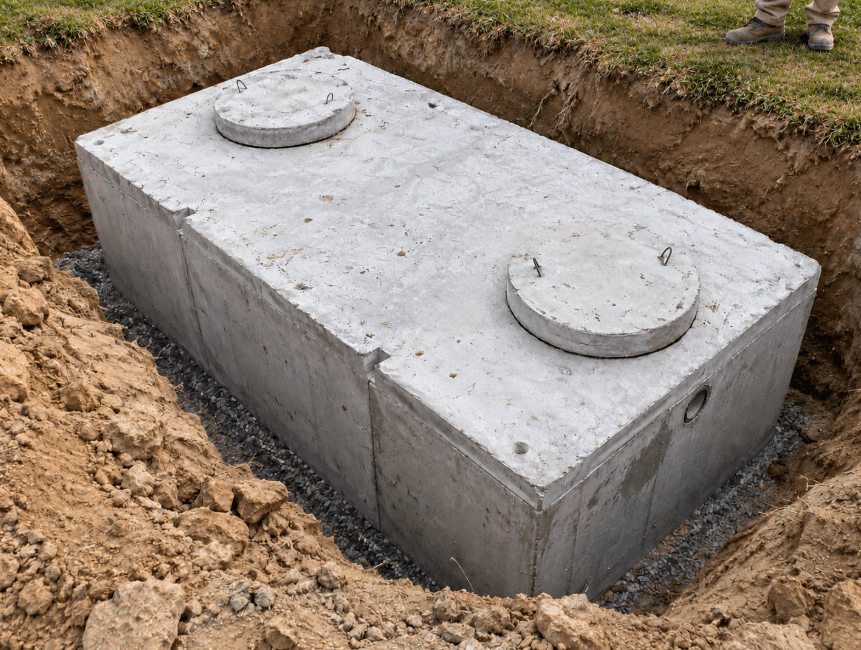
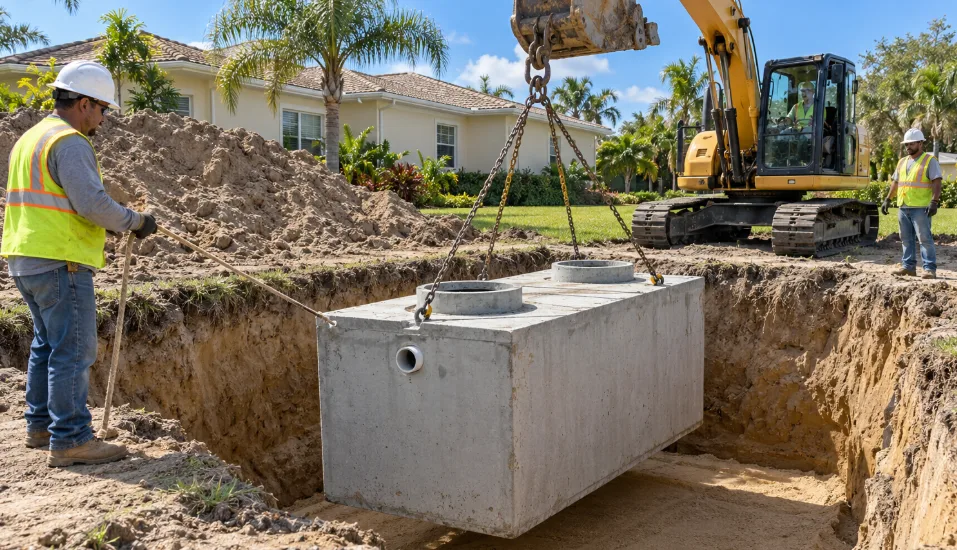
Concrete Septic Tank Replacement
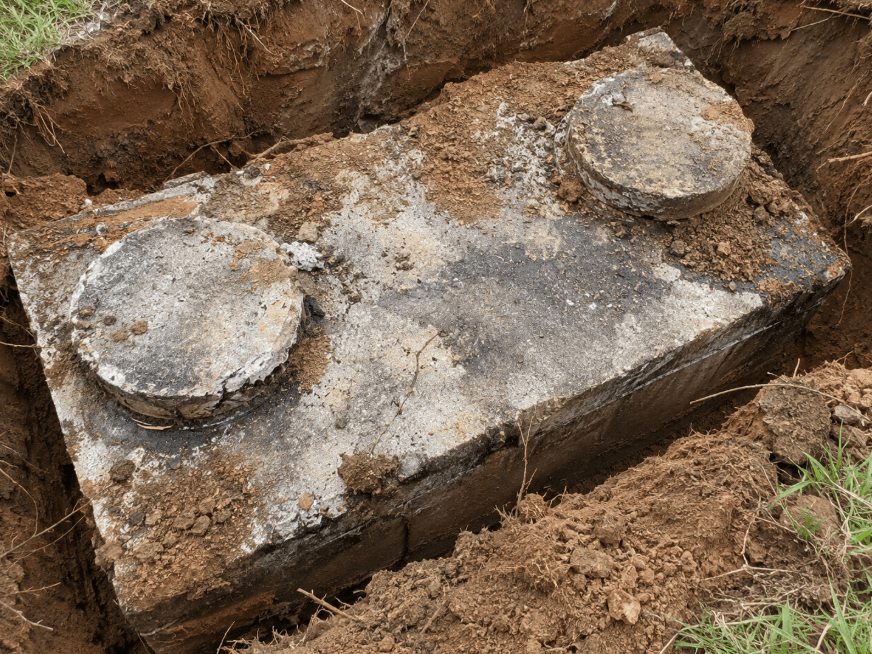
The existing septic tank had reached the end of its expected service life. The property owner arranged for a replacement tank. We carried out the tank replacement using a concrete unit with a capacity of 1000 gallons. We replaced the aging tank with the 1000 gallon concrete unit. The completed work addressed the old tank's need for replacement.
Cost
$9,792
Timeline to completion
3 to 5 days excluding permitting
Residential & CommercialTank & Drain Field ServicesClear Starting Prices
Why Choose Tallahassee Septic Services?
01Local in Tallahassee
02On time repairs and installations, including emergency service 24 hours a day
About 900 to 1,500 gallons is a useful residential planning range, with larger or additional tanks for higher demand or advanced treatment. The reviewed sources do not establish a measured average installed tank size for Tallahassee. Confirm the actual effective capacity from the record, approval label or a professional assessment.
Illustrative Florida residential examples when bedrooms and floor area match
Home example
Daily design flow
Minimum effective tank storage
2 bedrooms, about 1,100 sq ft
200 gallons/day
900 gallons
3 bedrooms, about 2,000 sq ft
300 gallons/day
900 gallons
4 bedrooms, about 2,600 sq ft
400 gallons/day
1,050 gallons
These are table examples, not complete designs. Larger approved flows can require 1,200 or 1,350 gallons of minimum storage. Treatment can add equipment and tanks. Florida sizing rules.
Tank gallons and gallons per day mean different things. Storage allows solids to settle. The field receives the approved daily flow and relies on evaluated soil. A bigger tank cannot repair a saturated or undersized drain field.
Tallahassee Septic Permits: Steps and Timeframes
Florida DEP directly handles septic permitting in Leon County. The program moved from the County health department on January 2, 2025. City or County building and development approvals can still be separate requirements. Program transfer notice.
1. Confirm the Property and Sewer Status
Gather the address, parcel details and old system record. DEP is the custodian of Leon septic permit records. Check with the utility before planning replacement: the City advises that a malfunctioning septic system within city limits must connect when sewer is available. Verify the exact address rather than applying that rule to every Leon County property. Record guidance · City sewer guidance.
2. Prepare Plans and a Site Evaluation
Prepare DEP Form 4015, the site plan and building floor plan. The site evaluation establishes relevant soil and groundwater conditions. If you choose a qualified private evaluator, complete and upload that evaluation before submitting the application. DEP's OSTDS portal accepts online applications; confirm applicable fees and any engineering requirements for your design. DEP application guidance.
3. Allow for the Correct Review
For a new system application, use 4 to 6 business days only as an initial planning allowance after the application is complete. This is not a published Leon County average or an approval guarantee. Site evaluation, engineering, missing information, treatment review and the agency queue can add time. Design, installation and final inspection are separate parts of the project.
Florida Rule 62-6.015(5) directs the agency to make every effort to issue a system repair permit within 2 working days after receiving the application. This is an effort target, not a guaranteed deadline or the turnaround for a new system. Confirm the permit category and current review schedule with DEP. Repair rule.
For performance based treatment, Rule 62-6.027 has a separate completed application review provision of 15 working days that can lead to a permit or further review if the proposal does not meet the criteria. Florida's general licensing law also provides initial completeness review and completed application decision periods, with exceptions. These provisions do not establish a typical local project duration. Ask DEP which pathway applies. Chapter 62-6 · Section 120.60.
4. Install, Inspect and Keep the Approval
Follow the permitted design and arrange required inspections. A submitted application does not authorize construction or use. Keep final approvals and any operating permit, maintenance contract and equipment service instructions. Installation, inspection scheduling and yard restoration add time beyond permit review.
Wakulla Springs and Nitrogen Reducing Treatment
Check sewer availability and whether the parcel is in the Wakulla Basin Management Action Plan area or a springs priority focus area. Nitrogen reducing treatment requirements depend on the location, lot and permit category. New installation, modification and repair can follow different pathways; have DEP confirm the scope for the exact address. Current DEP maps and requirement tables.
New systems on lots of one acre or less in affected BMAP areas generally need nitrogen reducing treatment when sewer is unavailable. Additional springs priority focus area rules can apply. Existing system work may also trigger treatment upgrades. Do not assume that a neighbor's older system is an approved option for your new project.
Approved options can include nitrogen reducing biofilters, qualifying aerobic units or performance based designs. An aerator alone does not establish nitrogen reduction approval. Concrete, fiberglass and polyethylene describe the shell, not the treatment performance. Confirm the complete equipment specification and ongoing care obligations. DEP treatment guidance.
Concrete, Fiberglass and Polyethylene Tanks
Concrete
A heavy, rigid tank requiring appropriate lifting access and a prepared base. Inspect seams, covers and walls for leakage or deterioration. Weight alone does not make an empty tank immune to groundwater uplift.
Fiberglass
A lighter manufactured shell. Support, burial conditions and fittings need to follow the approved model’s installation instructions. Inspect for shell damage and connection problems.
Polyethylene
A molded plastic tank that can simplify handling where access is tight. Correct backfill, burial depth and groundwater provisions matter. Inspect for deformation, damage and leaking fittings.
How Long Do They Last?
Expected service life depends on the selected product, installation conditions and maintenance. This is separate from the possible maximum life of a tank shell.
The EPA notes that a concrete tank may last 50 years or more, and other materials can have a similar lifespan. That is a possibility under suitable design, installation, maintenance and exposure conditions, not a warranty. Material alone is not a reliable replacement date.
The tank shell, drain field and mechanical equipment age differently. A sound tank can serve a failed field, and an advanced system can need a pump or aerator before its tank wears out. Base the decision on condition and function, not age alone.
Septic Problems to Watch for in Tallahassee
Heavy Rain and Closed Basins
Leon County describes roughly 60 inches of annual rain and closed basins that can retain stormwater. Waterlogged soil may stop a field from accepting wastewater. A yard does not have to be next to a river to develop a drainage problem. Ask about seasonal groundwater and recent rain when diagnosing a backup. County flooding guidance.
Different Soil From Lot to Lot
The Leon Sinks area south of Tallahassee is part of the Woodville Karst Plain, where limestone, underground openings and overlying soils shape drainage. Other properties have different soil limitations. Fast drainage does not prove that wastewater receives enough treatment. A qualified evaluation checks the actual soil and groundwater at the proposed field. Florida Geological Survey.
Mature Trees, Roots and Yard Traffic
Roots can reach openings in pipes and equipment. Heavy vehicles compact field soil or damage buried parts. Keep access clear and plan landscaping around the approved layout. Ask a qualified professional before excavating near major tree roots. UF/IFAS Leon landscaping advice.
Backups That Return After Pumping
A clogged filter, failed pump, leaking seal or restricted field needs a different response from routine solids removal. Tell us when the symptoms occur, whether there is an alarm and how the system behaves in dry weather. Running toilets and heavy water use can add to the problem.
Flooded Ground and Power Loss
Reduce water use during flooding or an equipment outage. Keep people away from wastewater and never enter a tank. An emptied tank can move or float in high groundwater, so have conditions assessed before pumping. Pumping cannot lower the surrounding water table. EPA flood guidance.
Overdue pumping lets sludge and floating waste build up.
Escaped solids can clog the field.
Too Much Water at Once
Running toilets, leaks and back to back laundry loads can overwhelm the system’s capacity.
Grease, Wipes and Chemicals
Grease and wipes obstruct flow.
Harsh chemicals can disrupt treatment and harm the system.
Rain and High Groundwater
Saturated ground leaves too little space for wastewater to drain and receive soil treatment.
Roots, Traffic and Damaged Parts
Roots can enter openings.
Vehicles crush components or compact soil. Broken fittings also disrupt flow.
Age, Sizing and Equipment Neglect
Deteriorated or undersized systems struggle.
On advanced systems, missed pump and aerator care can interrupt treatment.
Septic Care: Do This. Skip That.
Do
Keep inspection, pumping and permit records.
Fix running toilets and spread laundry across the week.
Keep lids secure and the service area accessible.
Follow the maintenance plan for treatment equipment.
Don’t
Flush wipes, even those labeled flushable.
Pour grease, solvents or harsh chemicals down drains.
Park, pave or drive heavy equipment over the field.
Assume additives or another pump out fix a failed field.
Septic Questions, Clear Answers
How often should I pump my tank?
Many conventional household tanks need pumping about every three to five years. Actual solids, capacity, occupancy and use determine the schedule. Advanced systems require their own ongoing care.
Why does my septic system back up after rain?
High groundwater or saturated soil can prevent normal field drainage. A blockage or damaged component is another possibility. Pumping alone does not fix groundwater conditions.
How long can a septic system last?
A well installed tank shell can last decades, but soil, groundwater, use and maintenance affect performance. The field, pumps and aerators have different service lives. Inspect condition rather than assuming that every part needs replacement at one age.
Can additives replace pumping?
No. Additives do not remove accumulated solids or replace inspection and equipment maintenance.
Do Wakulla Springs rules affect my property?
Check sewer availability and whether the parcel is in the Wakulla Basin Management Action Plan area or a springs priority focus area. Nitrogen reducing treatment requirements depend on the location, lot and permit category. New installation, modification and repair can follow different pathways; have DEP confirm the scope for the exact address.
Do you handle commercial requests?
Yes. Include the business use, capacity if known, access and waste type. Commercial and grease interceptor work need a specific scope.
Is the estimate form an emergency dispatch?
No. A submission does not confirm an appointment or immediate response. For active sewage overflow, reduce water use and get prompt professional assistance.
How long does septic permitting take in Leon County?
For a new system application, use 4 to 6 business days only as an initial planning allowance after the application is complete. This is not a published Leon County average or an approval guarantee. Site evaluation, engineering, missing information, treatment review and the agency queue can add time. Design, installation and final inspection are separate parts of the project. Florida Rule 62-6.015(5) directs the agency to make every effort to issue a system repair permit within 2 working days after receiving the application. This is an effort target, not a guaranteed deadline or the turnaround for a new system. Confirm the permit category and current review schedule with DEP.
Who has my septic permit record?
Florida DEP is the custodian of Leon County septic permit records. Gather your address, parcel information and any old permit number before requesting the available history.